Aliphatic isocyanate componentCreates an outdoor weather-resistant crosslinked structure
N500 · HEAVY-DUTY ANTICORROSION
Industrial steelwork · Coastal salt exposureN500 Industrial Heavy-Duty Protection
Polyaspartic Polyurea
Protective coating
N500 is a two-component heavy-duty anticorrosive topcoat for industrial steelwork, port machinery, coastal facilities, tank exteriors and external pipe surfaces. Select the primer, intermediate coat and design film thickness for the substrate and exposure. Tank linings and continuous immersion require separate validation.
Heavy-duty anticorrosion topcoat for metalCustom project colorsConfirm A/B ratio from supplied labels

N500Polyaspartic Polyurea Anticorrosion Coating
Industrial steelwork · Port machinery · Coastal facilitiesPackaging sizes
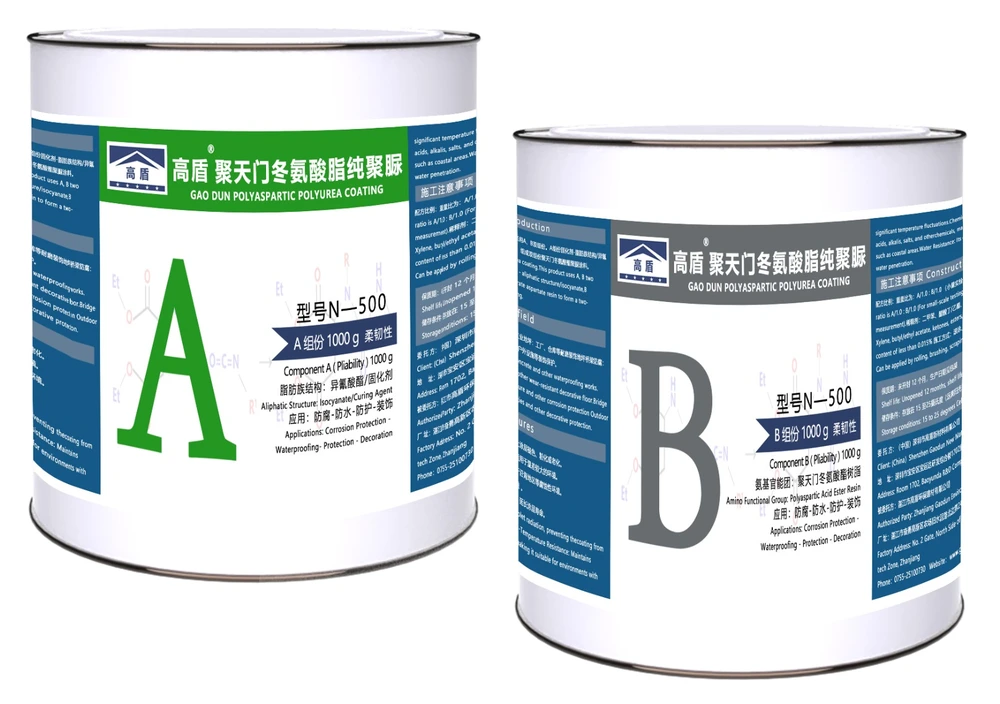
2 kg kit
Part A 1 kg + Part B 1 kg
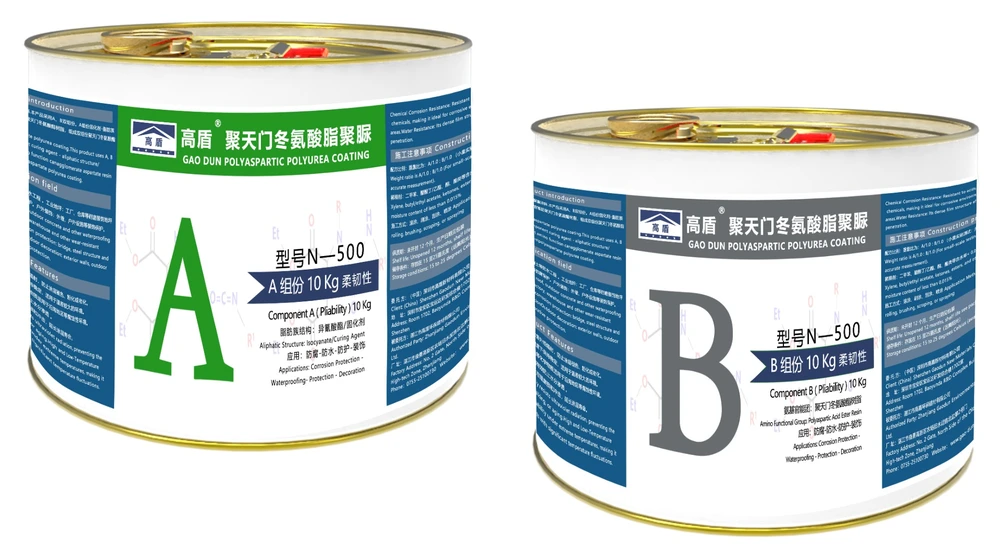
20 kg kit
Part A 10 kg + Part B 10 kg
Use kit sizes for ordering. The N500 TDS (V2.7) specifies 1:1 by mass for Part A to Part B. Follow the supplied product labels and batch-specific technical documents for the Part A to Part B mixing ratio.
ANTICORROSION STRUCTURE
Weathering and corrosion resistance
with mechanical surface protection
N500 forms a dense aliphatic polyaspartic protective layer. Results depend on derusting, preparation, primer/intermediate compatibility, thickness and application environment as well as the finish.
Polyaspartic Ester ResinForms a dense abrasion-resistant protective layer
Two-component reaction → Dense weather-resistant protective finish
PRODUCT POSITIONING
An industrial heavy-duty grade, distinct from ordinary building waterproofing
Protected facilities
Exposed steel structures, metal components, port machinery, tank and pipe exteriors.
Key exposure
Surface protection under coastal humidity, salt exposure, intense UV and industrial corrosion.
System principle
Design the complete system around metal, preparation, corrosion category, primer/intermediate layers and service targets.
INDUSTRIAL APPLICATIONS
N500 industrial protection applications
Illustrative effects by facility type; confirm the actual system for exposure and design targets.
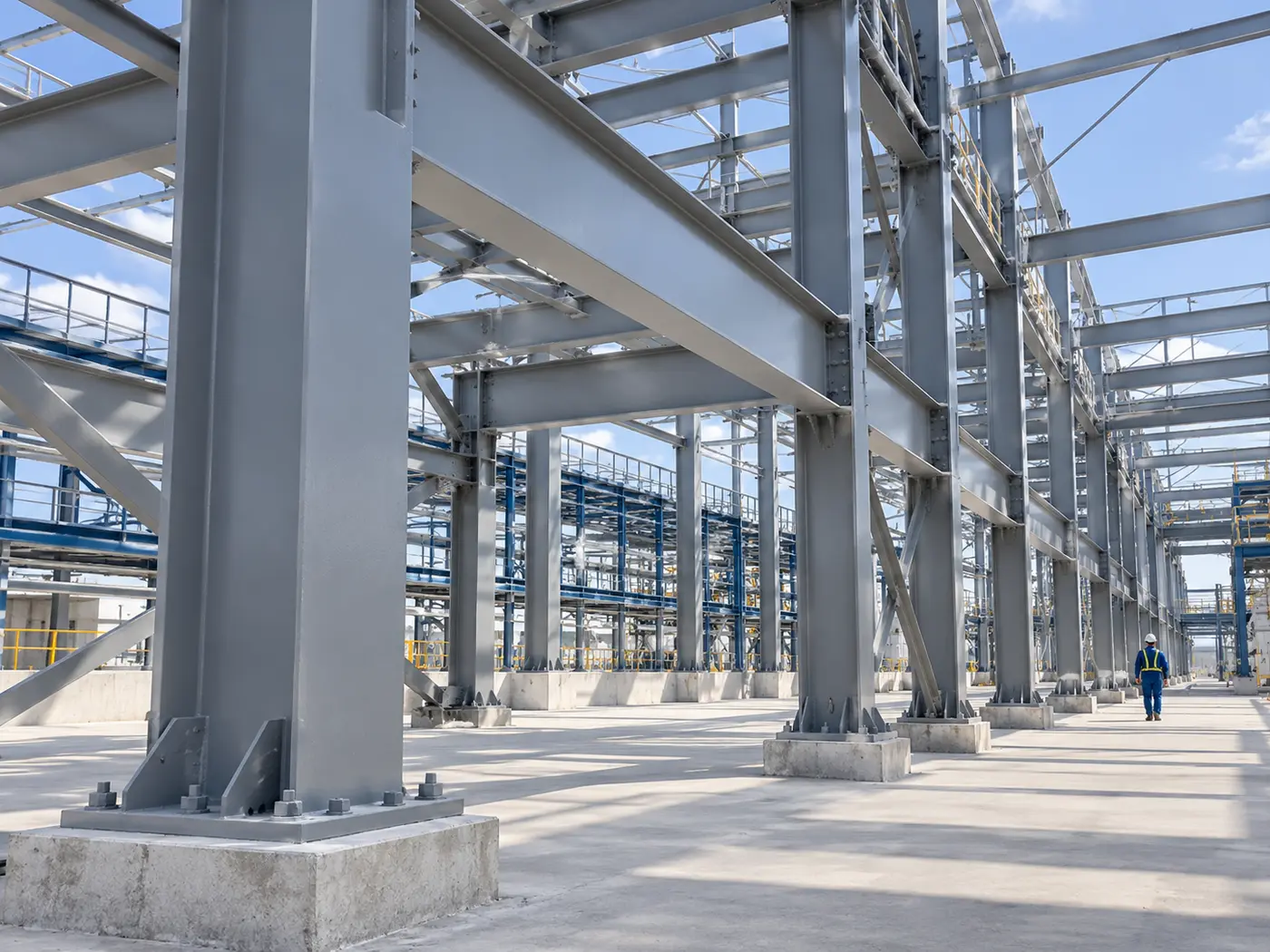


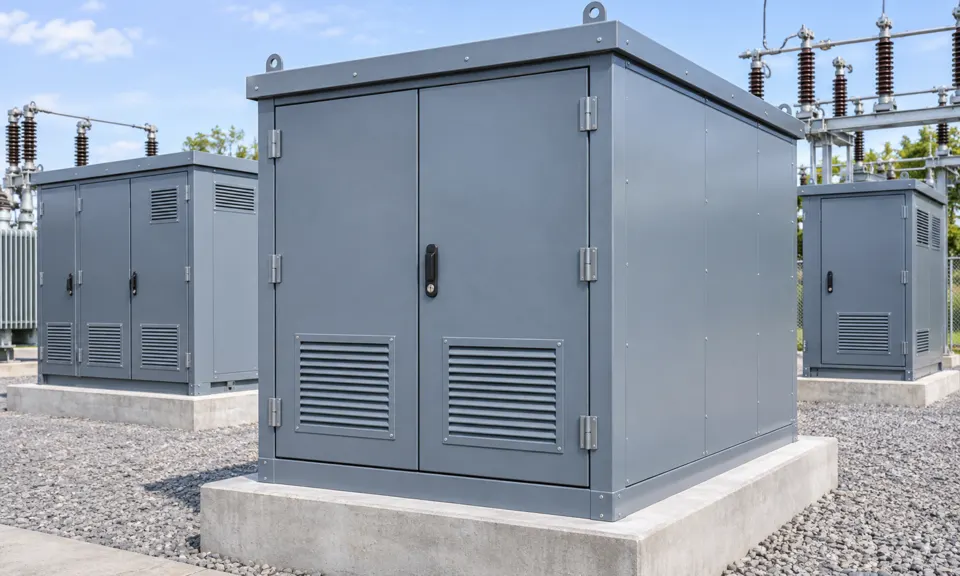
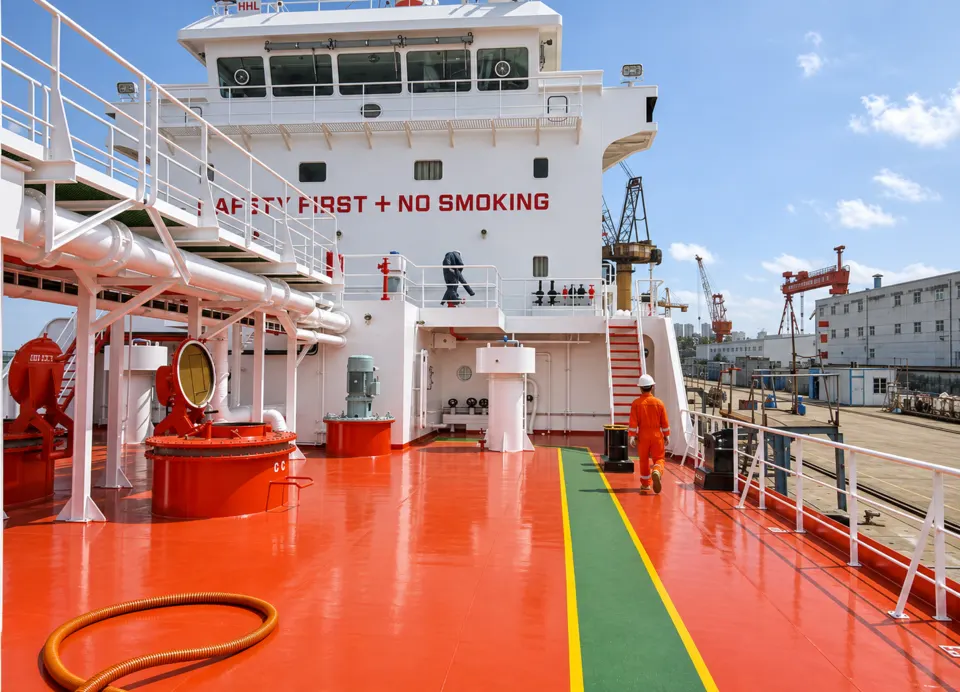
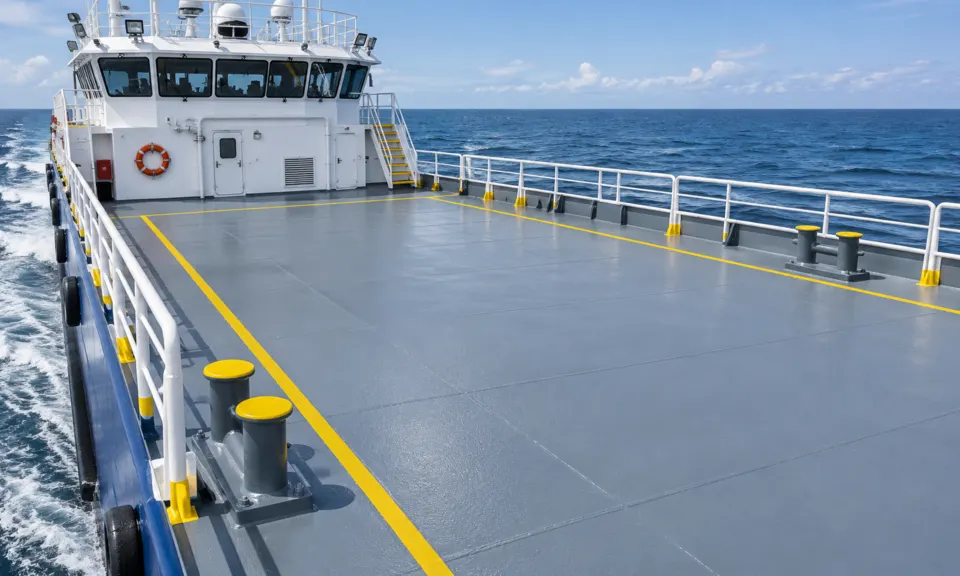
Images illustrate application effects, not specific projects. Confirm color, thickness and system for metal, exposure and project design. Evaluate coating systems for exposed decks and outdoor cabinets against project conditions. See the selection FAQ below.
PRODUCT SPECIFICATION
N500 specifications and project selection
Specify final thickness, consumption and system from exposure, design targets and site trials.
- Product type
- Two-component polyaspartic polyurea
- Core use
- Industrial metal heavy-duty protective finish
- Submitted-specimen reference
- TL26080331: submitted specimens immersed in 3% NaCl for 1,000 h, with no results reported separately by grade.
- Mixing ratio
- N500 TDS V2.7 specifies 1:1 by mass (A:B). Confirm against the supplied labels and batch technical documents.
- Colors
- Industrial grey, white, clear or project-specific colours
- Facilities
- Steel structures, port machinery, tank and pipe exteriors
ANTICORROSION SYSTEM
Four key controls for heavy-duty protection
- 01
Exposure assessment
Confirm location, salt/humidity, chemicals, UV and target protection period.
- 02
Surface preparation
Remove rust, oil, dust and loose material to project cleanliness and roughness requirements.
- 03
Compatible primer and intermediate coats
Choose primer/intermediate layers for the metal and exposure, verifying intercoat compatibility.
- 04
N500 finish
Apply at the confirmed ratio and within working time; control thickness, continuity and cure.
Note: 1,000-hour resistance in 3% NaCl is a liquid-immersion test, not neutral salt spray, and cannot directly establish project life. Durability depends on the complete system, thickness, workmanship and exposure.
APPLICATION SELECTION
Which industrial facilities can use N500?
Coastal and industrial heavy-duty protectionBuilding waterproofing and decorative protection
N500
Assess N500 as the heavy-duty topcoat for exposed steelwork, port machinery, tank exteriors and external pipework. Specify surface preparation, primer, intermediate coat and film thickness for the corrosion category. For wear protection on equipment housings, consider N100. Splash zones, prolonged immersion and linings require project-specific validation.
View the N500 coating system →N300 / N700 / N200
For primary roof and terrace waterproofing, prefer N300 for long-term weather exposure and consider N700 for standard exposure. Repair loose or hollow-sounding tiles, clean, dry and prepare retained tiles, then verify adhesion on a test patch. N200 is a clear wear-resistant topcoat. Verify adhesion and compatibility and provide a separate primary waterproofing layer on roofs.
N500 FAQ
Industrial protection FAQs
Can N500 be applied directly to rusty steel?
Not recommended. Derust, clean and prepare to project requirements before specifying primer, intermediate and N500 finish. For existing paint, check its condition and compatibility and verify adhesion on a site trial panel before coating the full area.
How many years does 1,000-hour salt resistance represent?
The test hours cannot be converted into years of service. Report TL26080331 records 1,000 h of immersion in 3% NaCl under GB/T 30648.1-2014 for submitted sample T26060219, without separate results by grade. The 2,000 h salt spray and 4,000 h artificial weathering figures in the TDS are company laboratory records. None establishes service life or a warranty term. Confirm supply specifications against the batch TDS and COA.
Can N500 colors be customized?
Confirm custom colors by project color, quantity and application requirements. Prepare color and system trials before production.
How do I obtain consumption and pricing?
Provide facility, metal, exposure, area, rust or old coating condition and target protection period.
Can N500 be used for tank lining or continuous immersion?
The tank and pipe applications on this page cover exterior corrosion protection. Qualify the coating system separately for tank linings, continuous immersion, strong solvents or special chemical media before selecting it for those conditions.
How do I choose between N500 and N100?
Evaluate an N500 coating system for industrial steelwork and coastal facilities with heavy-duty corrosion protection requirements. Evaluate N100 for general industrial surface protection such as equipment. Confirm the exposure, substrate preparation and complete coating system. For an application-ready two-component topcoat system, order the finished N500 kit. N-500A is a hardener raw material for formulators. Match the full grade designation to its TDS when ordering.
N100 →Can N500 be specified for exposed ship decks and outdoor substation cabinets?
Evaluate an N500 coating system for exposed steel decks and the exterior of outdoor metal cabinets. Check slip resistance and deck-area specifications for the intended use. For cabinets, confirm the metal substrate, compatibility with existing coatings and equipment requirements. Select the system based on exposure and a site trial.
Do the Part A and Part B package weights determine the mixing ratio?
Use kit sizes for ordering. The N500 TDS (V2.7) specifies 1:1 by mass for Part A to Part B. Follow the supplied product labels and batch-specific technical documents for the Part A to Part B mixing ratio.
At 25°C, can I recoat N500 as soon as it is touch dry?
Touch dryness alone does not establish readiness for recoating. At 25°C, N500 TDS V2.7 gives indicative drying times of 1–2 h to touch dry and ≤24 h to through dry. It specifies neither a fixed recoat interval nor a pot life. Confirm both using the supply documents and actual curing conditions.
MODEL-SPECIFIC TECHNICAL DATA SHEET
N500 dedicated technical data sheet
Blast steel to Sa 2½ as required by the project; indicative 1.0 kg/m² gives approximately 0.95–1.0 mm film.
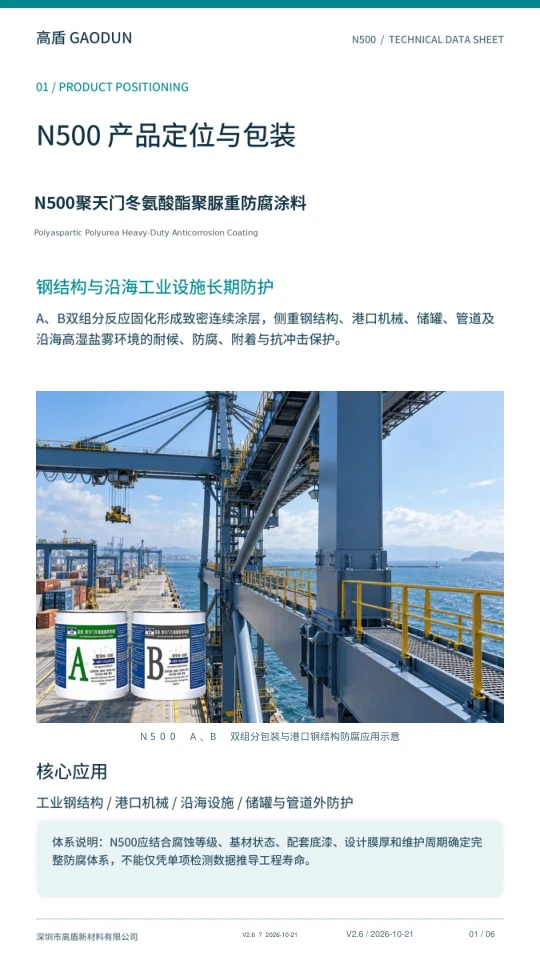
TDS editions and contents
Desktop: 6 pages. Mobile: 9 pages. Covers product positioning, typical properties, test data limits, application and storage.
V2.7 · 2026-11-19
Confirm ratio from actual supply documents; design total thickness for corrosion category and the complete system
TL26080331 reports results for submitted specimens under the stated conditions without separate results by grade. The 2,000 h salt-spray and 4,000 h artificial-weathering figures in the TDS come from in-house laboratory verification. Neither figure establishes a guaranteed N500 grade or batch value. N500 TDS, COA, batch documents and project confirmation govern supply.
INDUSTRIAL PROJECT SUPPORT
Provide exposure conditions for N500 system advice
Provide facility, metal, region, area, surface condition and target protection period.