XDI+HMDI combination
XDI and German Covestro HMDI are used in formulation and prepolymer design to provide reactive isocyanate groups.
N100 / INDUSTRIAL SURFACE PROTECTION
High-hardness industrial surface protection
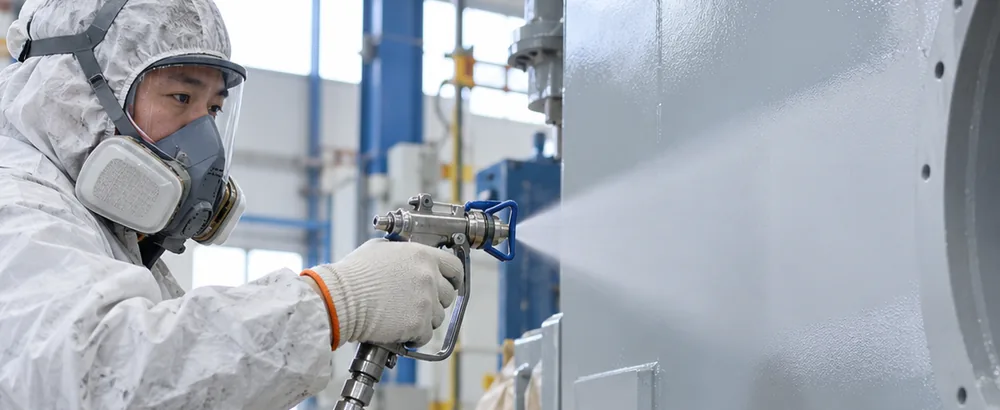
For equipment, vehicles, port facilities, outdoor wood and coastal buildings. Prioritizes hardness, wear and multi-substrate adhesion, with surface corrosion protection and waterproofing.
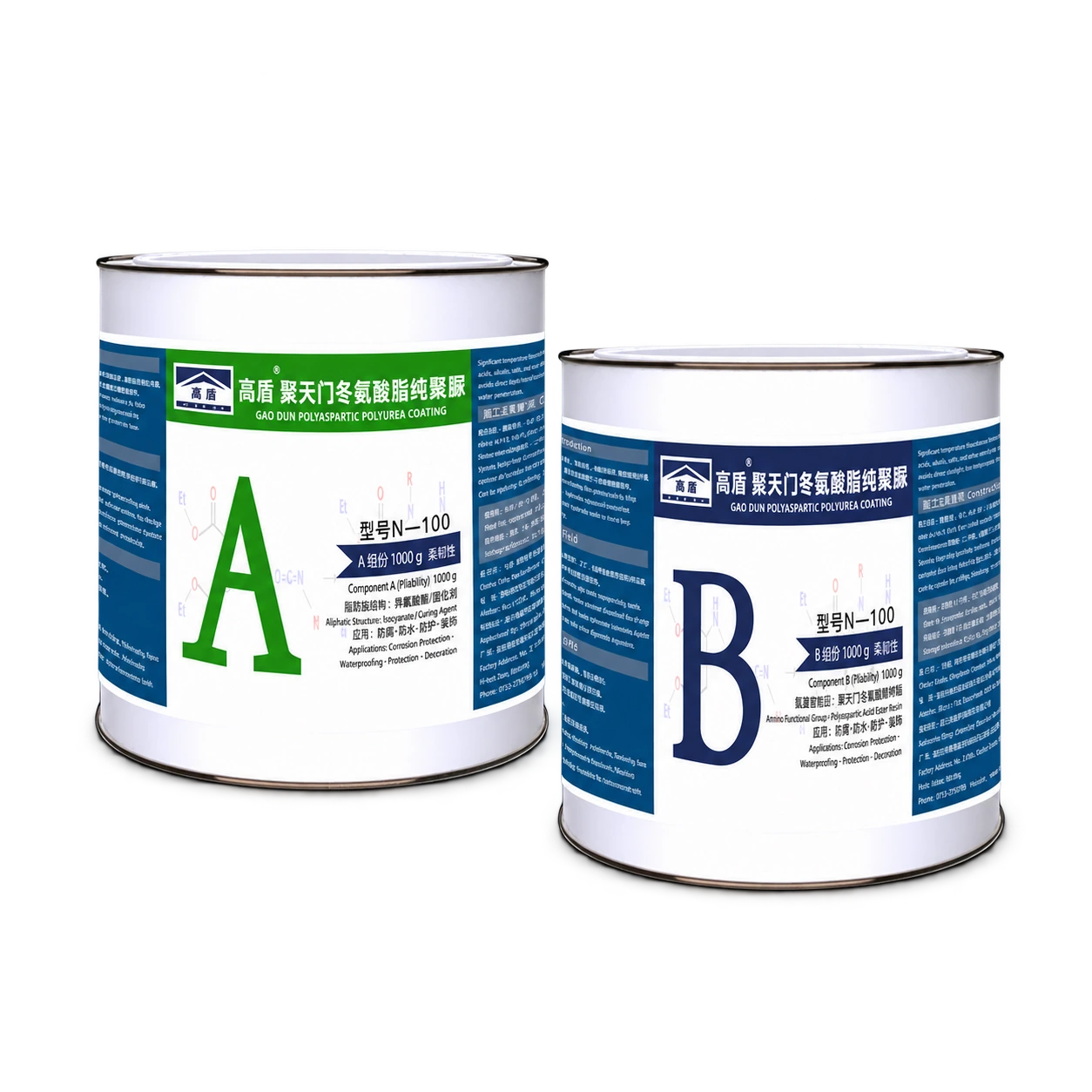
Part A 1 kg + Part B 1 kg
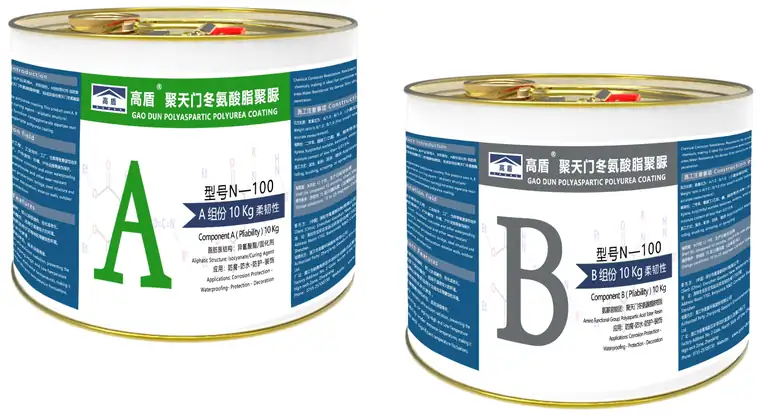
Part A 10 kg + Part B 10 kg
Gray Part B label
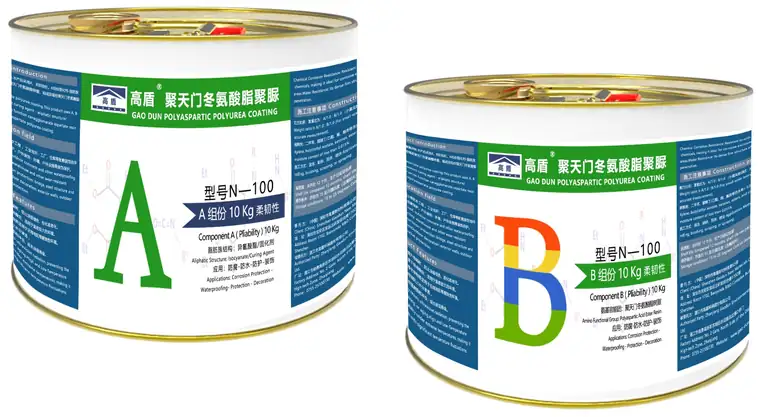
Part A 10 kg + Part B 10 kg
Multicolor Part B label
Coating finishes include clear, industrial light gray, white and custom colors. Confirm packaging labels and supply specifications against batch documents.
CHEMISTRY & APPLICATION
XDI and German Covestro HMDI are used in formulation and prepolymer design to provide reactive isocyanate groups.
Contains active hydrogen reactive with NCO; reacts with Part A to form urea structures and a continuous crosslinked polyurea coating.
Structure note: XDI and HMDI are distinct isocyanates; this product is described as a combined system. Raw-material names do not replace weathering verification of the finished coating.
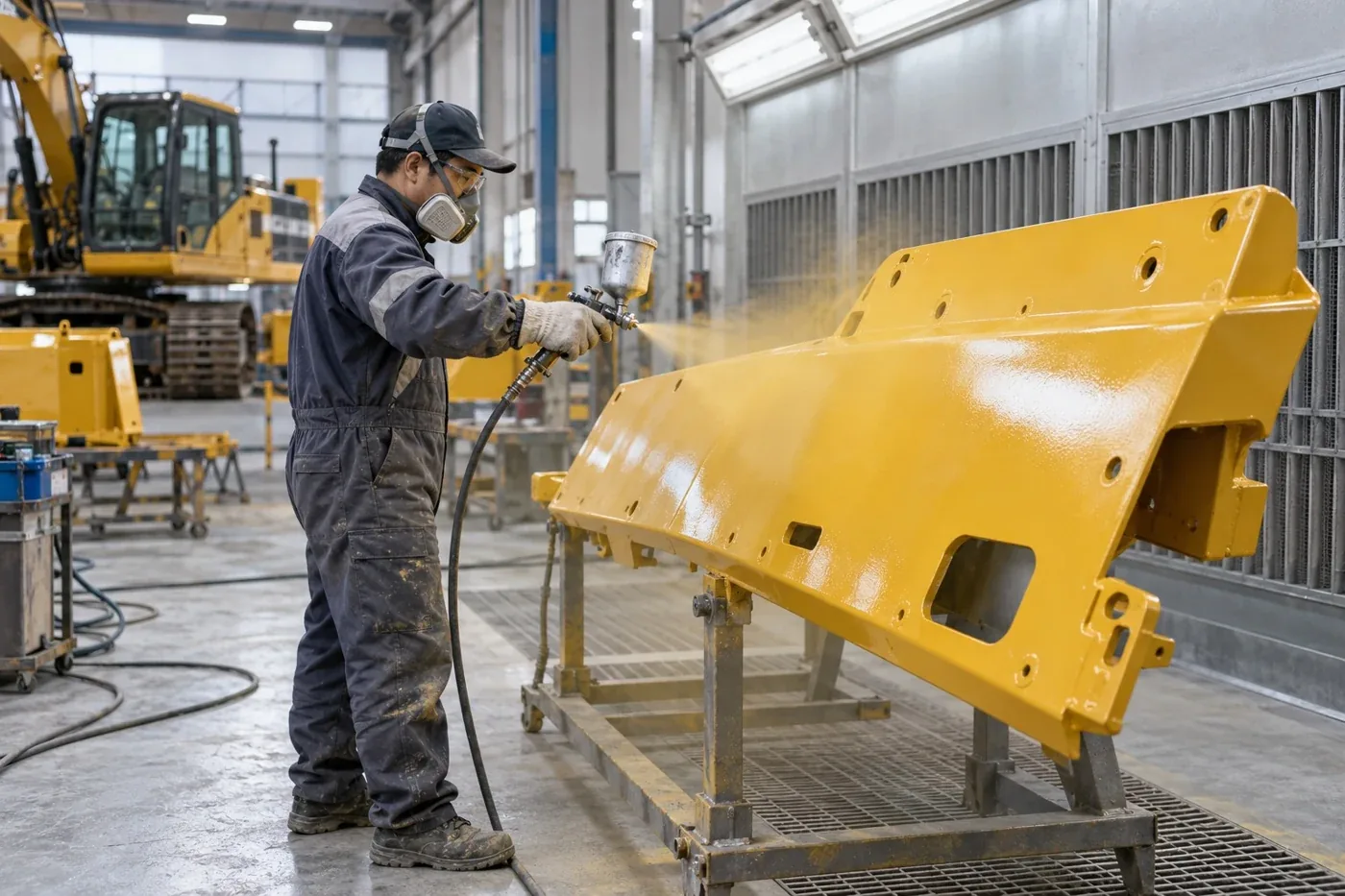
01 / INDUSTRIAL & VEHICLE PROTECTION
Design a complete system for above-ground equipment, metal components and non-critical exterior surfaces exposed to coastal humidity, rain, grit and salts.
Check adhesion and compatibility before refurbishing old paint. Degrease and derust bare metal to the project plan, and specify primer, thickness and coating layers.
Provide substrate and exposure details for system advice →
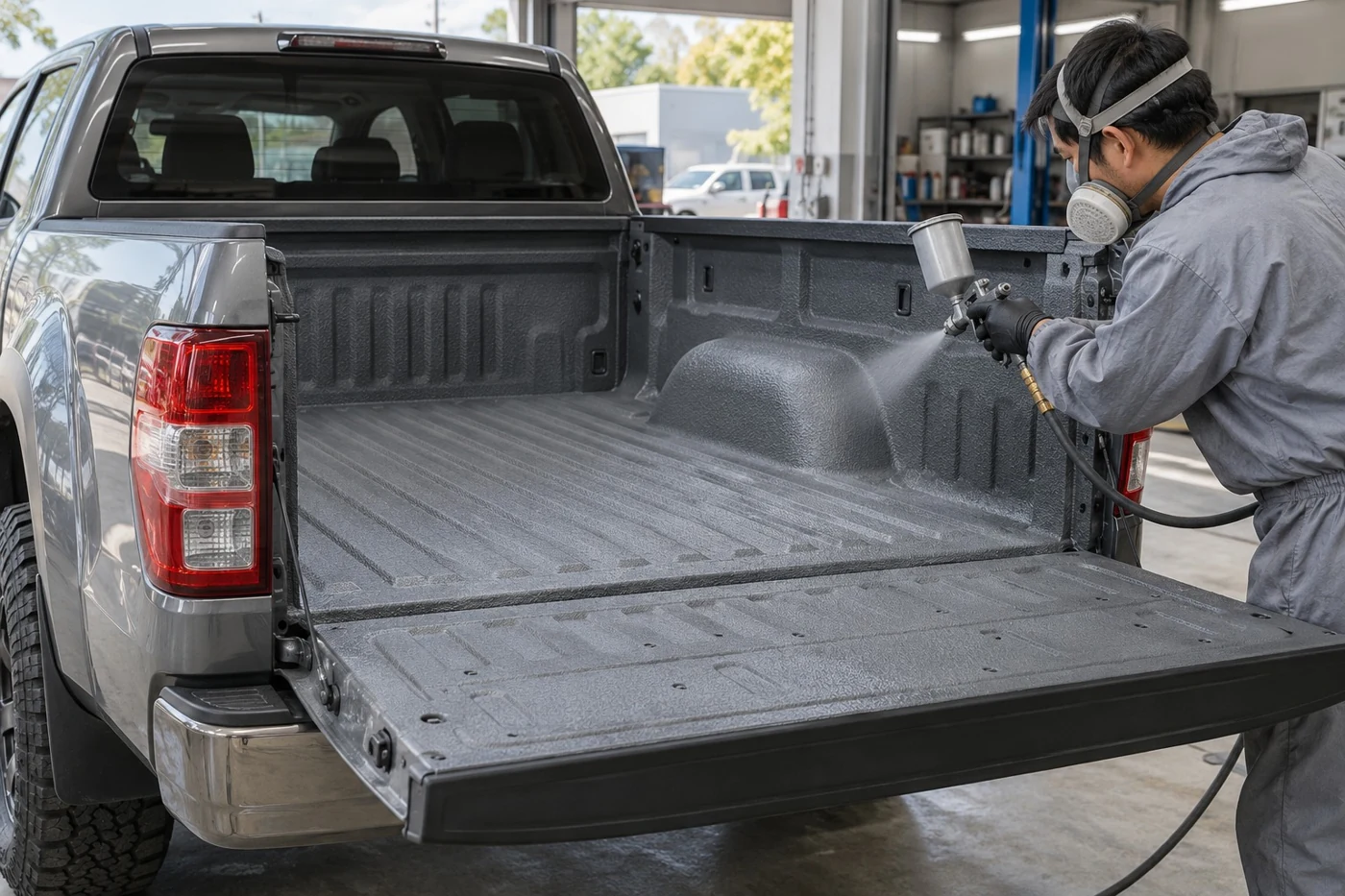
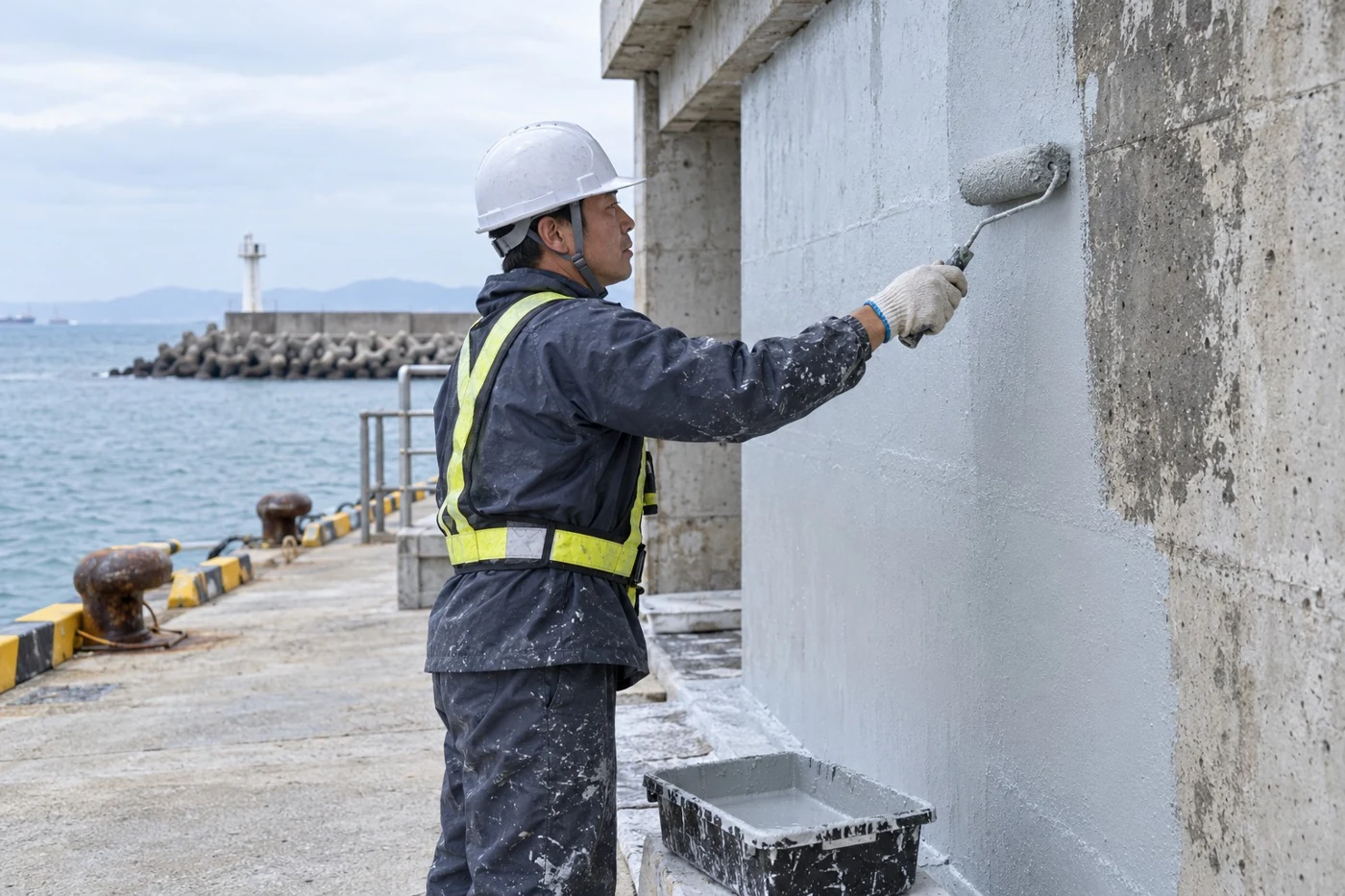
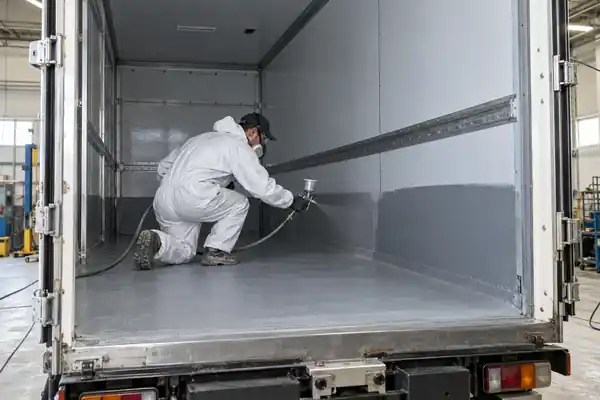
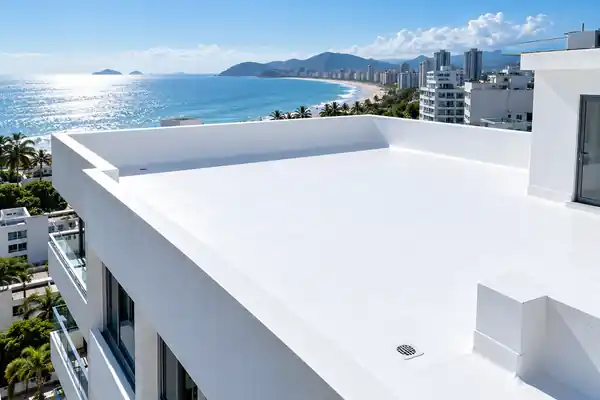

Mask brakes, steering, hot exhaust parts, electrical connections and service labels during vehicle coating. Refrigerated cargo areas are limited to non-food-contact surfaces. De-energize, close and mask electrical enclosures. Separately verify permanent seawater immersion, splash zones and unusual chemicals. Heavy-duty projects may also assessthe N500 system.
02 / OUTDOOR TIMBER PROTECTION
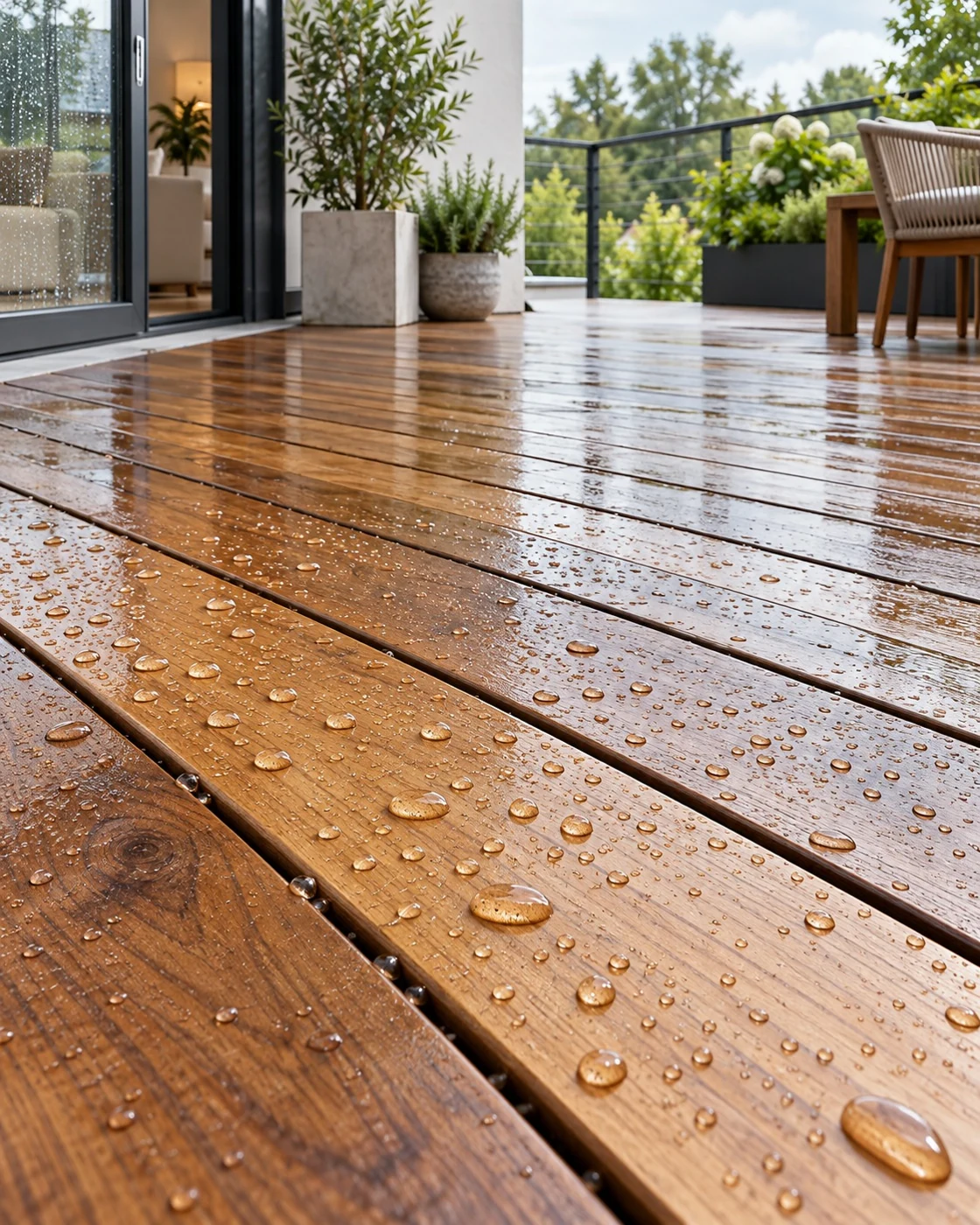
Clear waterproofing, surface protection and wear maintenance for terraces, timber floors, wooden-clad walls, railings and wood components.
The clear grade preserves texture and forms a continuous protective surface. Water beading alone does not prove waterproofing, decay protection or durability.
Wood protection here means surface waterproofing and protection, not certification for fungicidal action, mold control or internal timber preservation
03 / COASTAL BUILDING WATERPROOFING
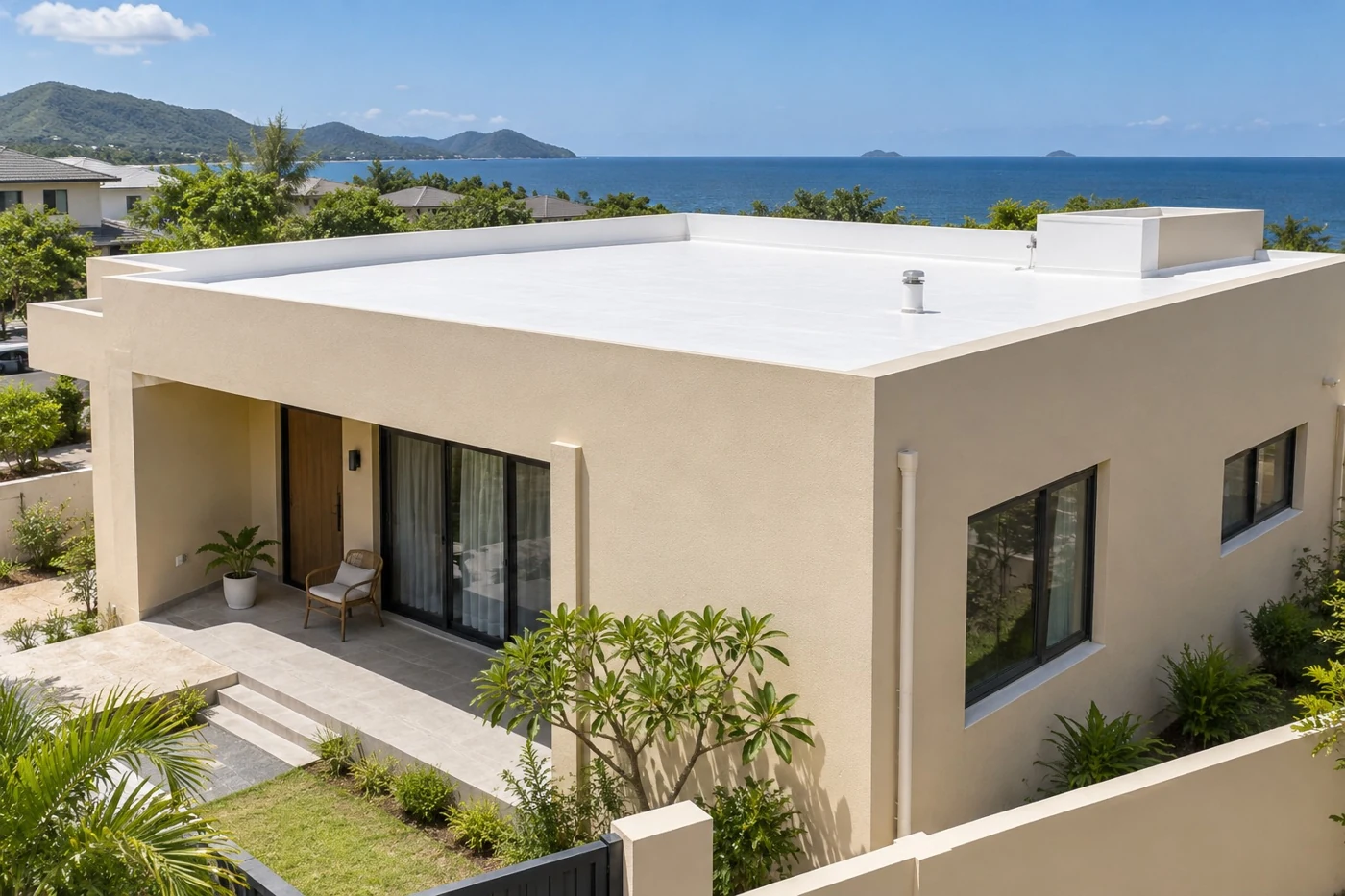
Assess N100 for coastal buildings requiring greater surface hardness, visible substrate texture or wear maintenance.
Use a sound, dry substrate; treat cracks and details to the design; specify consumption and thickness for the complete system
For waterproofing concrete roofs, tiled roofs and terraces, choose N300 for long-term weather resistance and N700 for standard weather resistance. Use N100 where its surface-protection characteristics are specifically required.
Images are application illustrations, not specific project records or test evidence. White color does not imply certified thermal insulation. Long-term results depend on the full system and site conditions.
VERIFIED PERFORMANCE
Assess hardness, abrasion, adhesion and salt-water behavior for industrial surface protection. Batch documents and project tests govern actual supply.
Higher surface hardness for equipment, vehicles and components.
750 g / 500 revolutions, CS-10; coating mass loss under these test conditions.
Concrete 4 MPa, steel 5 MPa and tile 7 MPa, on the substrates specified in the report.
No blistering, wrinkling, marked discoloration or detachment in 3% NaCl solution; this is not a salt-spray test.
Report TL26080331 records one submitted sample set, T26060219, whose name lists N100–N700. It gives no separate results by grade. The abrasion, adhesion and immersion results apply only to that sample under the reported conditions. Shore D hardness is an in-house result. Confirm supply specifications against the applicable TDS and batch COA. Immersion hours cannot be converted into service life. See the N100 TDS.
APPLICATION GUIDE
Remove loose material, oil, dust and standing water. Check rust and old paint on metal, and moisture, oils and waxes on wood.
Confirm adhesion, compatibility, clarity, color difference and appearance before large-area application.
A:B = 1:1 by weight. Mix thoroughly in small batches and use within pot life.
Assess spray, roller or brush application by substrate. Confirm working/recoat windows, consumption and cure from supply documents and the site plan.
Do not apply roof-consumption figures to every substrate. Without validation, do not overcoat asphalt, membranes, flexible waterproofing or oily/waxy surfaces. Bathrooms, enclosed persistently damp areas and negative-side water pressure are not recommended here.
MODEL DIFFERENTIATION
First identify the primary need: industrial surface protection, building waterproofing or heavy-duty steel corrosion protection. Then confirm the coating system for the substrate and service conditions.
Evaluate N100 for equipment housings, non-critical vehicle surfaces and above-ground port facilities. For a clear finish on outdoor timber, run a compatibility and adhesion trial.
Higher hardness · Abrasion resistance · Multi-substrate protectionFor exposed roofs, terraces or sound tiled substrates with long-term weathering requirements, evaluate N300 first. Prepare retained tiles and verify adhesion on a test patch before coating.
Primarily outdoor waterproofingBuilding-waterproofing refurbishmentFor waterproof refurbishment of roofs, terraces or sound existing tiles under general weathering requirements, evaluate N700. Prepare retained tiles and verify adhesion on a test patch before coating.
Primarily refurbishment and flexibility requirementsFor heavy-duty corrosion protection of steel structures, bridges or port steelwork, evaluate the N500 coating system first and confirm the corrosion exposure. N200 clear topcoat can be used as a compatible finishing layer after verification.
N100 / TECHNICAL DATA SHEET
V3.2 / 2026-10-29
Online files revised: 19 November 2026
Desktop edition: 4 pages. Mobile edition: 10 pages.
Organized by positioning, evidence, substrate systems and limitations for procurement and pre-application checks. Confirm pot life, recoating and storage life from supply labels and batch documents; do not substitute values from other grades.
N100 / QUESTIONS & ANSWERS
Evaluate N100 for industrial equipment, non-critical vehicle surfaces, above-ground port facilities and outdoor timber. For roof, terrace or sound-tile waterproofing, evaluate N300 first for long-term weathering requirements and N700 for general weathering requirements. Evaluate the N500 system first for heavy-duty steel corrosion protection. Use N200 as a clear topcoat after checking compatibility.
Assess above-ground port equipment, metal components, machinery covers, cargo beds and non-critical chassis exteriors. Confirm derusting, old-paint compatibility and the full system. Permanent seawater immersion, splash zones and unusual corrosion require separate verification.
Assess it for surface waterproofing, protection and wear maintenance on floors, timber-clad walls and railings. Check species, moisture, oils, waxes and paint, then trial clarity, color and adhesion. A surface coating does not replace internal preservation or dedicated biocidal treatment.
No. Report TL26080331 records one submitted sample set, T26060219, immersed in a 3% NaCl solution for 1,000 hours. The report does not break down results by grade. An N100 neutral salt-spray claim requires a separate salt-spray report for that grade. Immersion hours cannot be converted into service life.
N100 is approximately Shore D65 in an in-house test. Compare grades on the same scale and under the same test conditions, and select by use and substrate. The TDS comparison of about 30% higher hardness than N300 refers to an internal comparison using Shore D under the same conditions. Do not calculate a percentage from N100 Shore D65 and N300 Shore A86.
N100 is an industrial surface-protection grade. It can form a standalone or combined system depending on substrate. A project trial and technical plan determine whether primer or N200 clear finish is needed. The current N600 flake floor uses N600 for its sealer and intermediate flake layer, followed by N200 clear topcoat. It does not require a separate N100 primer.
View the N600 flake flooring systemGAODUN / SINCE 2016
Region / Substrate / Area / Intended use / Color
Contact Gaodun technical supportShenzhen Gaodun New Materials Co., Ltd.
Room 1702, Baoyunda R&D Complex, Bao'an District, Shenzhen, Guangdong, China
0755-25100730 · sz693310742@gmail.com